A project schedule slips fast when one key trade is missing. One electrician no-shows, a framing crew comes in short, or a pipefitter turns out to be underqualified, and the ripple effect hits every downstream task. That is why project based construction hiring is not just a staffing choice. It is an operational strategy that affects timeline, safety, budget, and client confidence.
Construction hiring rarely happens on a clean, predictable curve. Demand spikes when a project is awarded, shifts when change orders land, and tightens when multiple jobs compete for the same local labor pool. Hiring for that reality takes a different approach than standard recruiting. You need speed, trade-specific screening, and proof that the person can perform on an active jobsite.
What project based construction hiring actually means
Project based construction hiring is the process of bringing in workers for the specific needs, duration, and scope of a project rather than hiring only for permanent, long-term headcount. That can mean staffing a commercial build-out for six months, adding certified welders for a shutdown, or scaling labor up and down across phases like site prep, rough-in, finish work, and punch.
For employers, the value is flexibility. You can align labor costs more closely with active revenue and avoid carrying excess overhead between projects. For workers, it can mean access to more opportunities, better-fit jobs, and a clearer path to building a strong body of work across multiple sites and employers.
That said, project-based hiring is not the same as rushed hiring. If speed becomes the only priority, quality drops. The better model is fast hiring with verification built in.
Why project based construction hiring has become more critical
The labor market in the skilled trades has been tight for years, but the real pressure shows up on live projects. Contractors are not simply trying to hire. They are trying to backfill absences, staff specialized scopes, and keep schedules intact while maintaining compliance and workmanship.
A generic hiring process does not hold up well under those conditions. Job boards that treat a journeyman electrician like any other job seeker create extra screening work. Resume-based hiring also misses a major part of construction reality - the quality of work completed, the licenses held, and the ability to perform in the field under project conditions.
Project based construction hiring works best when the hiring process reflects how construction actually operates. Employers need to know whether a candidate has the right trade background, whether credentials check out, and whether the person can start quickly. Workers need visibility into real projects, clear expectations, and a straightforward way to show what they can do.
Where traditional construction hiring breaks down
The first problem is timing. Many firms begin hiring only after a project award is fully confirmed or when labor shortages become visible on site. By then, the best available workers may already be committed elsewhere. Waiting too long turns hiring into a scramble.
The second problem is weak screening. A candidate may look fine on paper but still lack the specific experience needed for a healthcare renovation, a multifamily rough-in, or an industrial mechanical install. Trade title alone is not enough. Scope matters.
The third problem is communication. Construction moves in real time, but many hiring systems still rely on slow application chains, email lag, and manual follow-up. That delay costs production days.
There is also a trust problem. Employers are often asked to make fast decisions with limited proof, while workers are expected to apply repeatedly without a clear way to present licenses, certifications, or project portfolios. Friction on both sides slows the match.
What a better hiring workflow looks like
A stronger process starts before the labor gap becomes urgent. The most effective employers build a repeatable hiring workflow around upcoming project demand, not just current openings. They forecast trade needs by phase, identify hard-to-fill roles early, and create a shortlist pipeline before labor becomes critical.
From there, screening needs to be trade-specific. Instead of asking whether someone has general construction experience, ask whether they have completed similar scopes, held the right responsibilities, and worked in comparable environments. A commercial plumber for ground-up work is not the same hire as a service plumber or a residential installer.
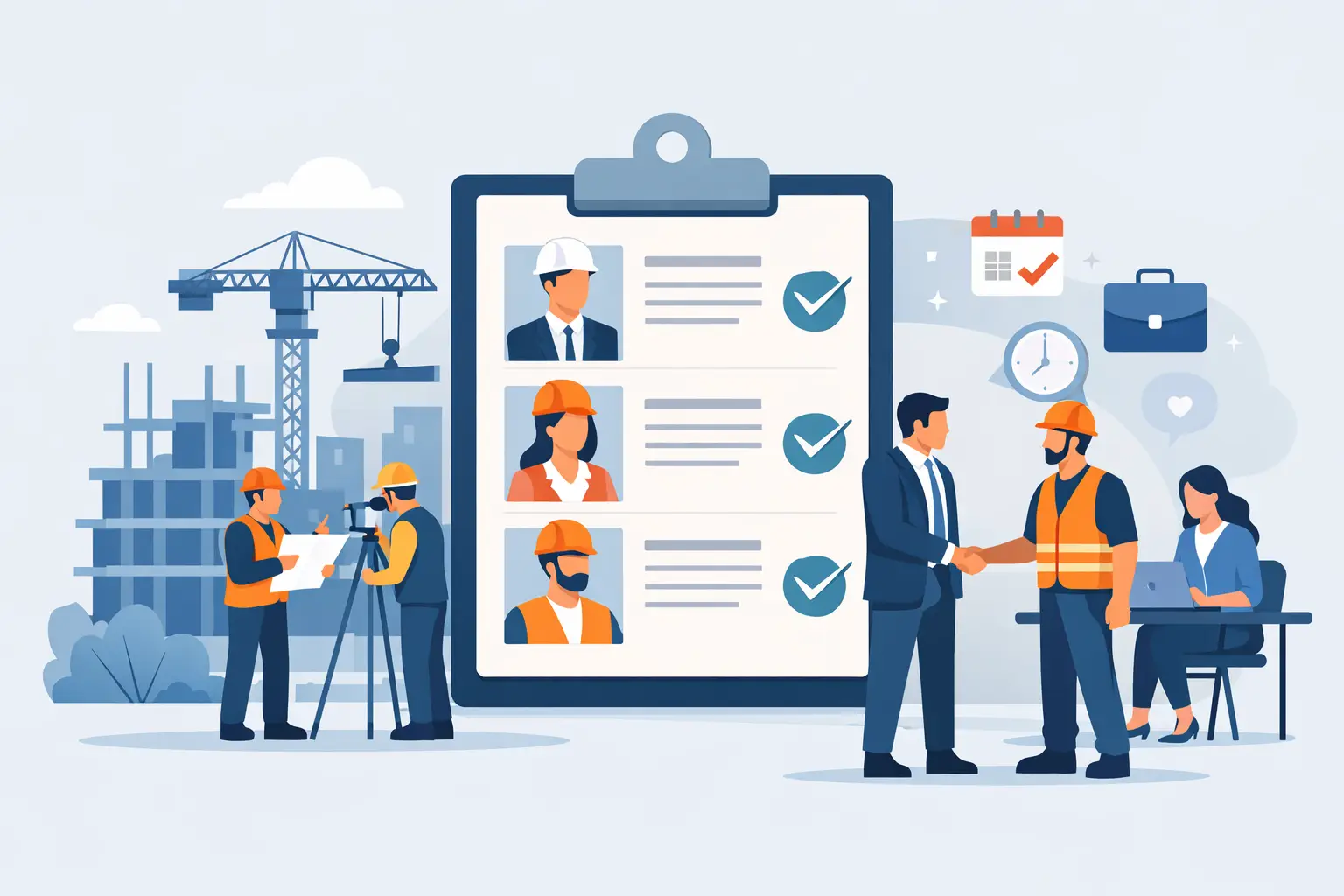
Verification is the next layer. Licenses, certifications, employment history, and completed project examples reduce guesswork. This matters even more when timelines are compressed. Fast decisions are easier when the information is already organized and credible.
Then there is communication. Mobile-first messaging, quick interview coordination, and clear start-date alignment shorten time to hire. In the trades, a slow process often means losing a qualified worker to a faster employer.
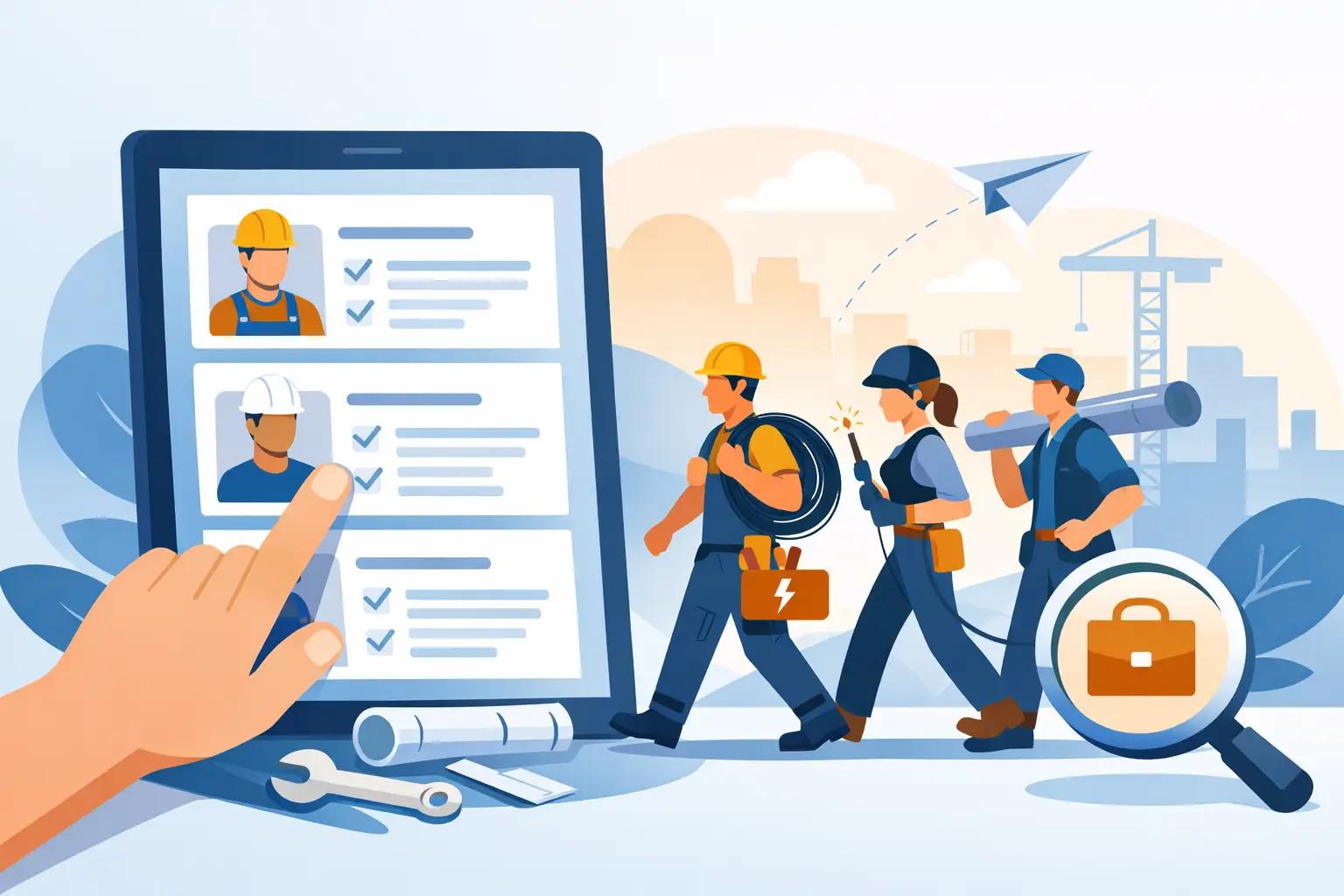
Platforms built specifically for skilled trades help compress that cycle. go2work, for example, is designed around verified worker profiles, trade portfolios, and AI-powered matching so employers can move from opening to qualified conversation with far less manual sorting.
How employers should evaluate candidates for project work
When hiring for a project, the question is not simply, Is this person good? The real question is, Is this person right for this phase, this scope, this site, and this timeline?
A strong candidate for project-based work usually shows four things. First, relevant trade experience tied to similar jobs. Second, verified credentials where the role requires them. Third, reliability - attendance, communication, and readiness to work. Fourth, evidence of workmanship, whether through a portfolio, references, or documented project history.
There are trade-offs. A highly experienced worker may not be available fast enough. A worker who can start tomorrow may need tighter supervision. A lower-cost hire may look attractive at first but create rework that pushes costs higher later. Good hiring decisions weigh speed against risk, not speed against perfection.
How tradespeople can stand out in project based construction hiring
For workers, project based construction hiring can open more doors, but only if your profile does more than list a job title. Contractors want proof. They want to see the type of work you have done, the equipment or systems you know, the environments you have worked in, and the credentials you hold.
That means your professional presence matters. A complete profile with licenses, certifications, employment history, and photos of completed work makes it easier for employers to assess fit quickly. It also helps you compete on more than hourly rate. When your experience is visible, value becomes easier to prove.
Responsiveness matters too. Employers filling active roles move quickly, especially when a project is already under pressure. Workers who reply fast, communicate clearly, and can confirm availability tend to get more opportunities.
There is also a long-term upside. Project work can build a stronger career story over time. Each completed job adds to your portfolio, expands your network, and positions you for better future roles.
The business case for verified hiring
In construction, a bad hire is expensive in ways that are not always obvious on day one. Delays, safety exposure, rework, crew disruption, and supervisor time all add up. That is why verification is not a nice-to-have. It is a cost control tool.
Verified hiring improves confidence at the point of decision. If an employer can confirm licenses, work history, and project experience upfront, they spend less time chasing references and less time correcting mistakes later. If workers can present verified qualifications clearly, they get taken seriously faster.
This is especially important in project environments where roles are specialized and start dates are tight. The smaller the margin for delay, the more valuable trustworthy candidate information becomes.
Building a hiring strategy that matches project reality
The best project based construction hiring strategy is not purely reactive, and it is not locked into one labor model. Most employers need a mix. Core permanent staff provide continuity, culture, and leadership on site. Project-based hires add flexibility, specialized skill, and capacity when workload spikes.
The right balance depends on your backlog, project type, trade mix, and local labor market. A company doing repeat tenant improvements may need a different staffing model than a contractor handling large civil work or industrial shutdowns. It depends on how often labor demand changes and how hard certain roles are to fill in your market.
What does not change is the need for a system. Firms that hire well under pressure usually have three things in place: they know what talent they need before the gap becomes critical, they use tools designed for skilled trades, and they remove friction from screening and communication.
Projects move too fast for hiring to stay generic. The closer your hiring process gets to the actual conditions of the field, the better your results tend to be.
Construction rewards teams that can execute without slowing down. Hiring should do the same. When you treat labor planning as part of project delivery, not a last-minute admin task, you give the job a better chance to stay on time, on budget, and staffed with people who can actually do the work.